A standard product and its premium counterpart often share the same core engineering, yet the gap in perceived value between them can be enormous. That gap is not accidental. It is engineered, tested, and priced with precision by companies that understand exactly what a customer is willing to pay for once they feel they are getting something the average buyer does not have access to.
The terms "deluxe package" and "special edition" get thrown around loosely, often as marketing shorthand rather than meaningful distinctions. But when you actually break down what these upgrades include - expanded functionality, priority access, unique cosmetic or structural elements, better support - a clear pattern emerges. Some upgrades genuinely change how a product performs. Others simply change how it looks or feels to own. For readers weighing whether an upgrade is a smart purchase or a marketing trick, understanding this difference matters more than the price tag itself. Products in the entertainment and gaming space illustrate this well; a title like find out more shows how a deluxe framing can bundle mechanical improvements with exclusive presentation in a single package. This article breaks down what these upgrades actually deliver, section by section, so you can judge value on substance rather than branding.
Understanding Premium Features in Modern Products
Premium features are the functional backbone of any upgraded package. They represent the tangible, usable differences between a base version and its elevated counterpart - the elements that change how a product works, not just how it appears.
Defining What Counts as a Premium Feature
A genuine premium feature alters capability. It might unlock additional processing power, extend storage, add a tool that solves a real problem, or remove a limitation present in the base version. The test is simple: if you removed the feature, would the product function noticeably worse or do less? If yes, it qualifies. If the change is purely visual, it belongs in a different category entirely - one addressed later in this piece.
Why Companies Segment Their Offerings
Manufacturers and developers split their offerings into tiers because customer needs vary widely. A casual user might never touch advanced settings, while a power user considers them essential. Tiered pricing lets a company capture value from both groups without forcing one to subsidize the other. This is standard practice across software, consumer electronics, and gaming products alike.
Common Categories of Premium Functionality
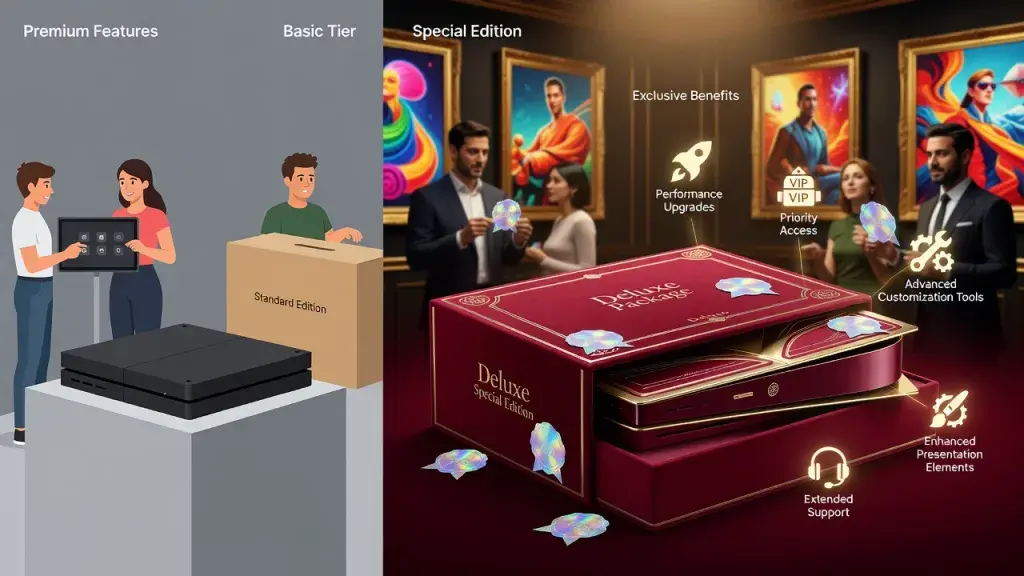
- Performance upgrades - faster processing, higher output limits, expanded capacity
- Access upgrades - early releases, priority queues, extended usage windows
- Customization tools - advanced settings, personalization options, integration capabilities
- Support upgrades - dedicated assistance, extended warranties, faster response times
Exclusive Benefits: Beyond the Basic Offering
While premium features change what a product does, exclusive benefits change the relationship between the buyer and the brand. These are the perks that surround the core product rather than living inside it.
Access-Based Exclusivity
The most common form of exclusive benefit is early or restricted access - being first to try a new release, entering a limited pool of participants, or gaining entry to content unavailable to standard customers. This type of benefit trades on scarcity and timing rather than functionality, and it tends to appeal strongly to enthusiasts who value being ahead of the curve.
Community and Recognition Perks
Many deluxe tiers include status markers: unique profile badges, recognition within a community, or invitations to closed forums and events. These benefits carry no functional weight but hold genuine social value for buyers who care about identity within a fan base or user group.
Long-Term Value Additions
Extended licenses, bonus content released over time, or ongoing perks tied to a single purchase all fall into this category. These benefits reward loyalty and create reasons for a customer to stay engaged with a product well past the initial purchase date.
What Defines a True Deluxe Package
Not every "deluxe" label is created equal. A well-constructed deluxe package bundles genuine upgrades in a way that justifies the price difference, while a poorly constructed one simply repackages minor cosmetic tweaks under a premium name.
Core Components of a Deluxe Package
A credible deluxe package typically combines three elements: functional upgrades, exclusive content or access, and some form of enhanced presentation. When all three are present and meaningful, the package earns its price. When only one is present - usually the presentation - the value proposition weakens considerably.
How Pricing Reflects Package Depth
Pricing for deluxe tiers should scale with the depth of what's included, not just the length of the feature list. A package with three substantial upgrades often delivers more value than one with ten minor additions. Buyers should evaluate depth over quantity when comparing options.
Red Flags in Deluxe Marketing
- Vague descriptions like "enhanced experience" without specifics
- Cosmetic changes marketed using functional language
- Bundles that repackage already-standard features as "exclusive"
Special Edition Features: Rarity Meets Function
Special editions occupy a distinct space from deluxe packages. Where deluxe tiers focus on ongoing functional upgrades, special editions often emphasize limited availability combined with unique content tied to a specific release, anniversary, or collaboration.
Limited Availability as a Value Driver
Scarcity plays a direct role in how special edition features are perceived. A feature or item available only during a launch window or in restricted quantities gains value not because it performs better, but because it cannot be obtained later. This dynamic appeals strongly to collectors and dedicated fans.
Collaborative and Themed Content
Special editions frequently include content built around collaborations - with artists, other brands, or cultural events. This content rarely changes core functionality but adds thematic depth that regular versions lack entirely.
Functional Additions Unique to Special Releases
Some special editions do include genuine functional differences: unique modes, expanded content libraries, or mechanics not available in the standard release. These cases blur the line between special edition and deluxe package, and buyers should read specifications carefully rather than assuming a special label guarantees function-first value.
Enhanced Functionality: The Practical Payoff
Ultimately, the question every buyer should ask is whether a premium tier changes daily use in a meaningful way. Enhanced functionality is the measurable outcome of premium features working as intended.
Measuring Real Improvement
Real improvement shows up in reduced friction: tasks completed faster, fewer workarounds needed, or capabilities that were previously unavailable becoming standard practice. If an upgrade doesn't reduce friction or add capability, its functional value is questionable regardless of marketing language.
Functionality Versus Novelty
It's easy to confuse novelty with functionality. A new visual theme feels exciting but does nothing for performance. Genuine enhanced functionality survives the excitement phase and continues delivering value months after purchase, which is the real test of whether an upgrade was worth the cost.
Evaluating Long-Term Usefulness
Before purchasing a deluxe or special edition tier, consider how the added functionality holds up over six months or a year. Features tied to trends fade quickly; features tied to genuine performance or capability tend to remain relevant far longer.
Making the Right Purchase Decision
Choosing between a standard version and a premium tier comes down to matching real needs against real offerings, not reacting to persuasive packaging.
Assessing Personal Use Patterns
Frequent users benefit more from functional upgrades, while occasional users may find exclusive benefits like early access or bonus content sufficient. Matching the tier to actual usage habits prevents overspending on features that will go unused.
Comparing Cost Against Delivered Value
Break down the price difference against each included feature individually. If the functional upgrades alone justify most of the price gap, the exclusive extras become a bonus rather than the main selling point - a healthier way to evaluate value.
Reading Between the Marketing Lines
Specification sheets reveal more than promotional copy. Comparing exact feature lists between standard and premium tiers, rather than relying on adjectives like "enhanced" or "exclusive," gives a clearer picture of what money actually buys.
Frequently Asked Questions
Is a deluxe package always worth the extra cost?
Not automatically. Its value depends on whether the included upgrades match your actual usage patterns. A deluxe tier packed with functional improvements you'll use regularly justifies the cost; one built mostly around cosmetic extras usually does not.
How can I tell if a feature is truly premium or just relabeled?
Compare it directly against the standard version's specification list. If the feature changes performance, capacity, or capability, it's genuinely premium. If it only changes appearance or naming, it's likely a relabeled standard element.
Do special edition features ever become available later at a lower price?
Sometimes, particularly with digital content that publishers choose to re-release. However, edition-exclusive content tied to a specific launch window or physical scarcity often remains permanently unavailable once the initial release period ends.
What's the difference between exclusive benefits and premium features?
Premium features change what a product does functionally. Exclusive benefits change your relationship with the brand or community - things like early access, recognition, or bonus content that don't affect core performance.
Should I buy a deluxe package on release or wait?
If the appeal rests on limited-time exclusive benefits, buying early makes sense. If the appeal is purely functional upgrades, waiting often allows for price drops without losing access to the core improvements.
Can enhanced functionality justify a significantly higher price?
Yes, when the functional gain measurably improves your regular use of the product. The justification breaks down when the price increase outweighs the practical benefit gained from the added capability.