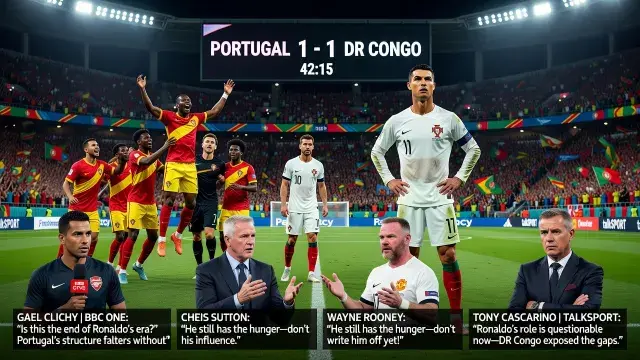
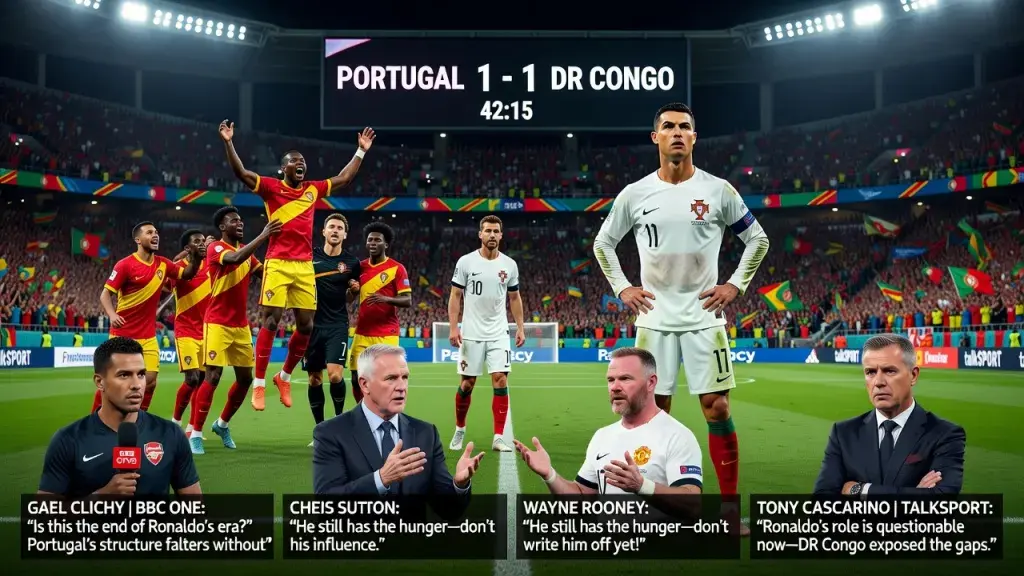
Portugal's World Cup campaign began under a cloud of scrutiny after Roberto Martinez's side were held to a draw by DR Congo in their opening group fixture. What looked like a routine evening for one of the tournament's pre-competition favourites quickly unravelled, and the debate over Cristiano Ronaldo's place in the starting eleven has erupted with renewed force.
Joao Neves headed Portugal ahead inside seven minutes, and for a brief moment the expected procession appeared to be on. Instead, DR Congo steadied themselves, grew into the contest, and equalised through Newcastle United forward Yoane Wissa - a headed goal that also marked the central African nation's first ever strike at a World Cup finals. The moment carried enormous significance for African football, a continent whose teams have arrived at this tournament with genuine ambitions rather than merely hoping to survive the group stage. While analysts and pundits dissected Portugal's shortcomings, the racing post greyhound bet app conversation in broader sports media reflected something that felt increasingly undeniable: DR Congo had not merely defended - they had competed, pressed, and at times threatened to win it outright.
Ronaldo, 41, made history by appearing at a sixth World Cup, equalling the record set by Argentina's Lionel Messi. Yet the occasion passed him by on the pitch. His bid to become the first player ever to score in six separate World Cup tournaments came to nothing, and by the end of the ninety minutes the conversation had shifted sharply from milestone to burden.
Clichy and Sutton Lead the Criticism
Speaking on BBC One, former Arsenal and Manchester City defender Gael Clichy offered one of the most measured but pointed assessments of Ronaldo's impact. "We said at the beginning of the game that Cristiano Ronaldo will be helping young players because of his character, because of his experience," Clichy said, "but sometimes unconsciously those kinds of players can take too much light." He argued that Portugal's attacking patterns were distorted by Ronaldo's presence - that the team kept stretching play wide in an attempt to feed their captain rather than combining naturally through the centre. "The game is not natural because of him being on the pitch," Clichy added, suggesting Portugal might find a more fluid rhythm without him.
Chris Sutton was less nuanced in his verdict. The former England striker described Portugal's display as "painful" and "insipid," and reserved particular criticism for Martinez's decision-making. "Cristiano Ronaldo was on the periphery and the game passed him by," Sutton said. "Martinez has to be brave enough to be the manager. He is not the manager of the Portugal team and that is their issue." The implication was clear: Ronaldo's status within the squad has effectively constrained the coach's ability to manage tactically in real time.
Rooney Defends His Former Teammate
Not everyone agreed with the sharpest lines of criticism. Wayne Rooney, who played alongside Ronaldo at Manchester United, acknowledged Portugal's collective underperformance but pushed back against placing the blame on one man. "Cristiano Ronaldo's stats are never going to be the best, so what he needs are chances," Rooney said. "If he gets chances, and a good chance, he will score goals." Rooney's broader point - that Portugal lacked energy and runners across the whole team - has merit. A 1-1 draw against DR Congo is a poor result regardless of who leads the line, and questions about squad selection, pressing intensity, and overall tactical set-up extend well beyond the number nine position.
Cascarino's Verdict and the Broader Question for Martinez
Former Republic of Ireland international Tony Cascarino was among the most direct in his assessment, telling talkSPORT that Ronaldo "offered nothing to the Portuguese team" and expressing disbelief that Martinez left him on for the full match. "He just looks like time has caught up with him," Cascarino said. "I can't believe Martinez has kept him on." He went further, questioning whether the coach was managing a football match or managing a relationship, suggesting that Martinez - already known to be departing at the end of the tournament - may have prioritised harmony over hard calls.
That is the crux of the matter for Portugal now. They remain a squad of genuine quality, with talented young players capable of hurting any side in this competition. But if the team's shape, rhythm, and attacking combinations are being compromised to accommodate a 41-year-old who is no longer capable of the high-intensity pressing or dynamic movement modern international football demands, Martinez must decide what his actual priority is: managing Ronaldo's farewell, or winning the World Cup. DR Congo, for their part, deserved their point and then some. For African football, it was a result to savour.