
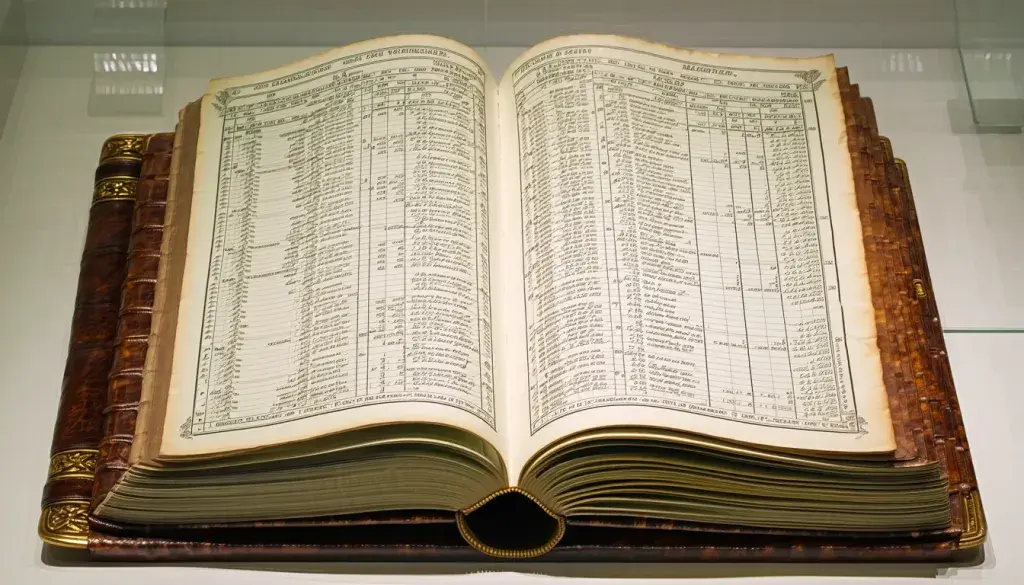
Accounting ledgers form the unyielding foundation of every financial statement, capturing the lifeblood of business transactions in a structured chronicle. Without them, reconciling debits and credits becomes guesswork, and audits turn into nightmares. Professionals often overlook their simplicity until a discrepancy arises, revealing how this tool enforces discipline across accounts.
Consider a small retailer: daily sales, supplier payments, and expense claims flow into journals first, then consolidate into ledgers for clarity. What is a ledger? At its core, it organizes these entries by account, enabling swift balances and trial balances. Many beginners ask, what is the definition of a ledger? It's the master record where transactions post permanently after journaling, distinguishing it from temporary logs.
Ledger in accounting definition extends to its role in double-entry bookkeeping, ensuring every debit has a credit. This article demystifies ledger basics, from setup to analysis. Readers gain practical insights to implement ledgers effectively, avoid pitfalls, and leverage them for informed decisions. Whether managing personal finances or a startup, mastering ledgers transforms chaotic records into reliable data. Explore types, processes, and tools ahead to build confidence in handling fundamentals.
The Definition of a Ledger in Accounting
The ledger stands as the central repository in accounting systems. What is a ledger? It collects and categorizes all financial transactions from journals into individual accounts. This organization allows accountants to view complete histories for assets, liabilities, equity, revenues, and expenses.
Ledger Definition
Ledger definition refers to a book or digital file holding detailed entries for each account. Transactions post here after journal recording, grouped by type. Debits appear on the left, credits on the right, facilitating balance calculations.
What Is the Definition of a Ledger?
What is the definition of a ledger? Precisely, it's the book of final entry where accountants summarize journal data. Each page or section represents one account, showing running totals over time.
Key Distinctions from Journals
Ledgers differ from journals by focusing on accounts rather than chronology. Journals record events sequentially; ledgers classify them permanently. This separation supports accurate trial balances.
Types of Accounting Ledgers
Ledgers vary by scope and purpose, tailoring to organizational needs. Understanding types ensures proper transaction flow.
General Ledger
The general ledger aggregates all accounts. It mirrors the chart of accounts, posting summaries from subsidiary ledgers. Balances here feed financial statements directly.
Subsidiary Ledgers
Subsidiary ledgers detail control accounts from the general ledger. Accounts receivable and payable ledgers track individual customers or vendors, controlling totals without cluttering the main book.
- Accounts Receivable Ledger: Customer balances and invoices.
- Accounts Payable Ledger: Supplier obligations.
- Inventory Ledger: Stock movements.
Sales and Purchases Ledgers
Sales ledgers mirror receivables for revenue tracking. Purchases ledgers parallel payables, aiding cash flow forecasts. Both integrate with inventory controls.
How Ledgers Function in Double-Entry Bookkeeping
Ledgers operationalize double-entry principles, where every transaction affects two accounts. Posting maintains equilibrium.
The Posting Process
Postings transfer journal entries to ledgers. Accountants match dates, amounts, and explanations, updating debit and credit columns. Running balances compute after each entry.
T-Accounts for Visualization
T-accounts illustrate ledger structure: a T shape with left debits and right credits. They simplify verification before formal posting.
Trial Balance Preparation
Ledger balances compile into trial balances, listing debits against credits. Discrepancies signal errors, prompting ledger reviews.
Importance of Ledgers for Financial Integrity
Ledgers safeguard accuracy and compliance. They enable audits and strategic analysis.
Role in Financial Statements
Ledger totals populate balance sheets and income statements. Asset and liability figures derive directly from ledger footings.
Auditing and Regulatory Compliance
Auditors scrutinize ledgers for transaction validity. Proper maintenance satisfies GAAP or IFRS requirements.
Decision-Making Support
Account trends in ledgers inform budgeting and forecasting. Managers spot variances early through regular reconciliations.
Maintaining and Modernizing Ledgers
Effective ledger management demands routine and adaptation. Shift from paper to software enhances efficiency.
Manual vs. Digital Ledgers
Manual ledgers suit small operations but risk errors. Digital versions automate postings, integrate with ERP systems, and reduce manual labor.
Best Practices for Accuracy
Reconcile monthly, use standardized formats, and train staff on postings. Backup digital files regularly.
- Segregate duties to prevent fraud.
- Cross-check with bank statements.
- Review for unusual entries.
Common Pitfalls to Avoid
Omit postings or transpose figures frequently. Neglect subsidiary reconciliations leads to general ledger mismatches.
What is a ledger used for?
A ledger organizes transactions by account for balance computation and reporting. It supports double-entry verification and statement preparation.
How does a ledger differ from a journal?
Journals record transactions chronologically as they occur. Ledgers group them by account for summaries and totals.
Can small businesses skip detailed ledgers?
No, even simple spreadsheets mimic ledgers for tax compliance and growth tracking. Proper ledgers scale with operations.
What software handles ledgers best?
Accounting software automates ledger functions through cloud-based platforms. Choose based on transaction volume and integrations.
How often should ledgers reconcile?
Monthly reconciliations catch errors promptly. Daily for high-volume businesses ensures real-time accuracy.
Is a ledger required by law?
Regulations mandate reliable records for taxes and audits. Ledgers fulfill this by providing auditable trails.